Péter Magyar and TISZA as rising stars: When FIDESZ’s ‘weapon’ backfired (2024-2026)
Péter Magyar officially departed from FIDESZ in February 2024 amidst the public upheaval caused by the Katalin Novák presidential pardon scandal. Then, he joined the centre-right TISZA party, active since 2020, and aimed at transforming it into a dynamic contender to FIDESZ. By that time, the, predominantly centrist and centre-left, forces of the Hungarian opposition relentlessly charged FIDESZ with demagoguery, tightening the authoritarian grip, and pushing Hungary further away from the EU and into the orbit of Russia.
However, apart from a charismatic persona, these opposition actors equally lacked a political jargon capable of communicating their message and resonating with the potential grievances of an electorate that had long been socialized within the dominant narratives propagated by FIDESZ. This comprised the formerly governing party’s self-assigned image and role as the ‘unquestionable defender of the Hungarian people’s interests’, domestically and internationally. Therefore, from a supply and demand perspective, there was plenty of room for a dynamic contender and former FIDESZ-insider, such as Magyar, to engage with a series of public grievances that had started accumulating against FIDESZ – this time not solely in Budapest, but also among voters in the periphery.
In accordance with a regular pattern among parties of the national conservative and radical right across Central and Eastern Europe (e.g. PiS in Poland, Estonia’s EKRE, and the Latvian National Alliance), FIDESZ institutionalized the provision of benefits to social categories such as pensioners as well as other sets of ‘family benefits’. Since the early 2020s, though, widespread criticism started surfacing against the ruling party for informally setting up a countrywide network of ‘crony capitalism’, consisting of powerful entrepreneurs with an access to FIDESZ, under the auspices of the governmental National System of Cooperation (NER). For instance, since 2019, the foundation model for Hungarian higher education effectively placed several leading universities (e.g. Corvinus and Semmelweis) under the control of managing boards consisting of private entrepreneurs with links to the government.
In the longer run, this resentment intensified among entrepreneurial circles who found themselves excluded from this patrimonial, ‘crony capitalist’, arrangement. More importantly, the ramifications of the Hungarian forint’s fluctuating course and galloping inflation (2022-2024) were increasingly felt across the society. To these, one should add a heightening dissatisfaction with the operation and quality of the public healthcare system.
In addition to calls for a change of course in foreign policy, TISZA incorporated the necessity for dismantling the patrimonial, ‘crony capitalist’, network as an integral component of its electoral campaign. Especially between 2025 and 2026, in his public speeches and official statements, Péter Magyar, repeatedly and emphatically, succeeded in recasting the FIDESZ apparatus as the ‘corrupt and distanced from the people’ elite – therefore, subverting the rhetoric that Viktor Orbán had effectively utilized against his political rivals, at home and abroad, in the not so distant past.
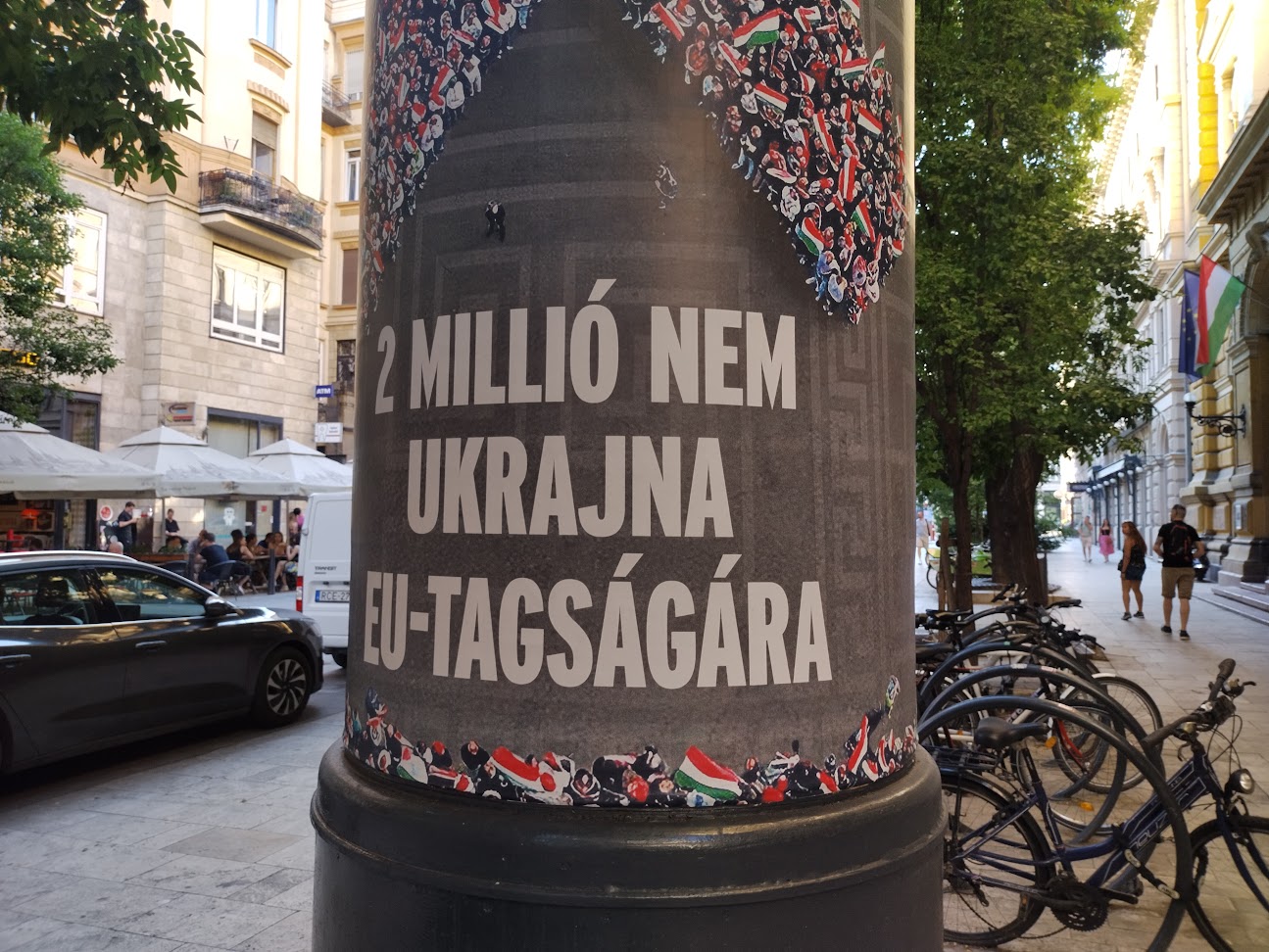
Benefitting from Magyar’s ‘formerly insider’ knowledge of FIDESZ and its party organization, this was a message that TISZA successfully communicated to mobilize anti-FIDESZ resentment; this time no longer solely in Budapest, but across most of the countryside. In response, as early as the European elections of June 2024, FIDESZ attempted to delegitimize their emerging rivals via disproportionally dubbing TISZA, first, ‘a domestic enabler of Brussels’ who would turn Hungary into a ‘migrant country’ and, later, a party ‘financed by Ukrainians’.
However, this, largely reflexive, endeavour to associate TISZA with a set of negative qualities, eventually took its toll on a more articulate and argumentative contestation of this party’s standpoints by FIDESZ. At this given moment, it is not an easy task to predict TISZA’s course of action in the longer run. Nevertheless, one can argue that TISZA’s landslide victory over FIDESZ largely relied, from both an ideological and instrumental perspective, on this party’s success in redirecting one of FIDESZ’s primary ‘weapons’ at Viktor Orbán and his allies.