Films and series tell stories like no other art form can: by way of moving images, sound, text, editing, costume, lighting, they create immersive spaces into which the audience is invited to escape from daily life. We usually watch them physically and mentally “leaned back”, in a state of disavowal, consciously opting to suspend disbelief for the sake of total immersion into a ninety-minute movie or a three-hour series binge. With our critical mind turned off for the sake of entertainment, it is in this relaxed state that our brains are most susceptible to internalizing the subtle messages embedded in the depictions we perceive on screen.
This is particularly true when it comes to representations of Romani people in cinema. From D.W. Griffith’s The Adventures of Dolly (1908) and Emir Kusturica’s award-winning Time of the Gypsies (1988) to contemporary productions such as Acasă, My Home (2020) and Netflix’s The Immortal Man (2026), or any of the hundreds of films analyzed by Dr. Radmila Mladenova in her book The White Mask and the Gypsy Mask in Film, the conclusion remains the same:
Reductive and stereotypical representations of Romani people are a cornerstone of “Western” cinema, fostering a “ban on empathy” (Mladenova) toward real Romani people.
Why? Because, as I have written elsewhere, “throughout the history of art, media and cinematography, this entire ethnic minority, irrespective of the individuality of its very heterogeneous members, has been reduced to the figure of the “g(ypsy)”, historically associated with the very tropes we see in film: proximity to nature, illiteracy, “life outside civilization”, poverty, big families, etc., representing a scapegoat for the frustrations, ambivalences, longings, and fears of majority society.”
It is out of the necessity to spread this message that the Critical Film & Image Hub at the Research Center on Antigypsyism at Heidelberg University was created. We seek to break the cinematic frame of antigypsyism by exposing stereotypical representations of Romani people in visual media, but also to foster awareness and change in the film industry and society as a whole. Established in 2025 as part of the Cooperation Network against Antigypsyism, the project is funded by the German Federal Ministry for Education, Family Affairs, Senior Citizens, Women and Youth through the program Live Democracy!.
The Frame of Antigypsyism
Antigypsyism is a historically constructed, persistent complex of customary racism against social groups identified under the stigma “g” or other related terms. As with any other form of racism, it involves a homogenizing and essentializing perception and description of the concerned groups. In the case of antigypsyism, those affected are sometimes attributed seemingly positive characteristics like talent for music, but mostly negative traits like laziness, criminality, etc. The results are discriminatory social structures and practices which exclude and ostracize people, pushing them to the margins of society.
This form of racism has developed in Europe since the Early Modern Period, including the approximately five centuries of Roma slavery in Moldova and Wallachia. As Klaus-Michael Bogdal demonstrates in his book Europe and the Roma, arts like literature, painting, and later photography have contributed decisively to the invention and prevalence of the “g” figure. It was imbued with the aforementioned characteristics, which were projected onto Romani bodies, leading to their scapegoating, exploitation and criminalization. Film representations thus draw on a historical visual memory that has long established stigmatizing and stereotypical images and portrayals of Romani people.
The creators and primary audience of such images are members of the majority, which uses them to express its perception of an alleged reality. Hence, antigypsyism in film reflects the interpretive power and projections of majority society with its patterns manifesting in a variety of ways, from symbols and tropes to costume, lighting and casting. Mladenova emphasizes that these productions don’t show real people, but representations of racialized groups imagined by non-Romani artists. To underline this, she introduces the concept of the mask – the “g” mask to talk about this figure, and the “white” mask to analyze representations of dominant culture.
As filmmakers and viewers alike have been socialized through these images which allow them to indulge in worlds of crime and passion from a safe distance, such depictions have not only survived, but thrived with every new form of art throughout centuries, culminating in film. With realism as their main stylistic approach when it comes to the creation of the “g” mask, cinematic productions claim to give a glimpse into the lived reality of actual people, imposing a homogenizing and essentializing perspective. As such, they contribute to the reproduction of stereotypes which perpetuate discriminatory behaviors in real social situations, as audiences rarely distinguish between the representation on screen and the people they meet:
While “white” viewers get to enjoy the films and then return to their privileged lives, Romani people continue to face marginalization ignited and upheld by the media reproduction of stereotypes.
Breaches in the System
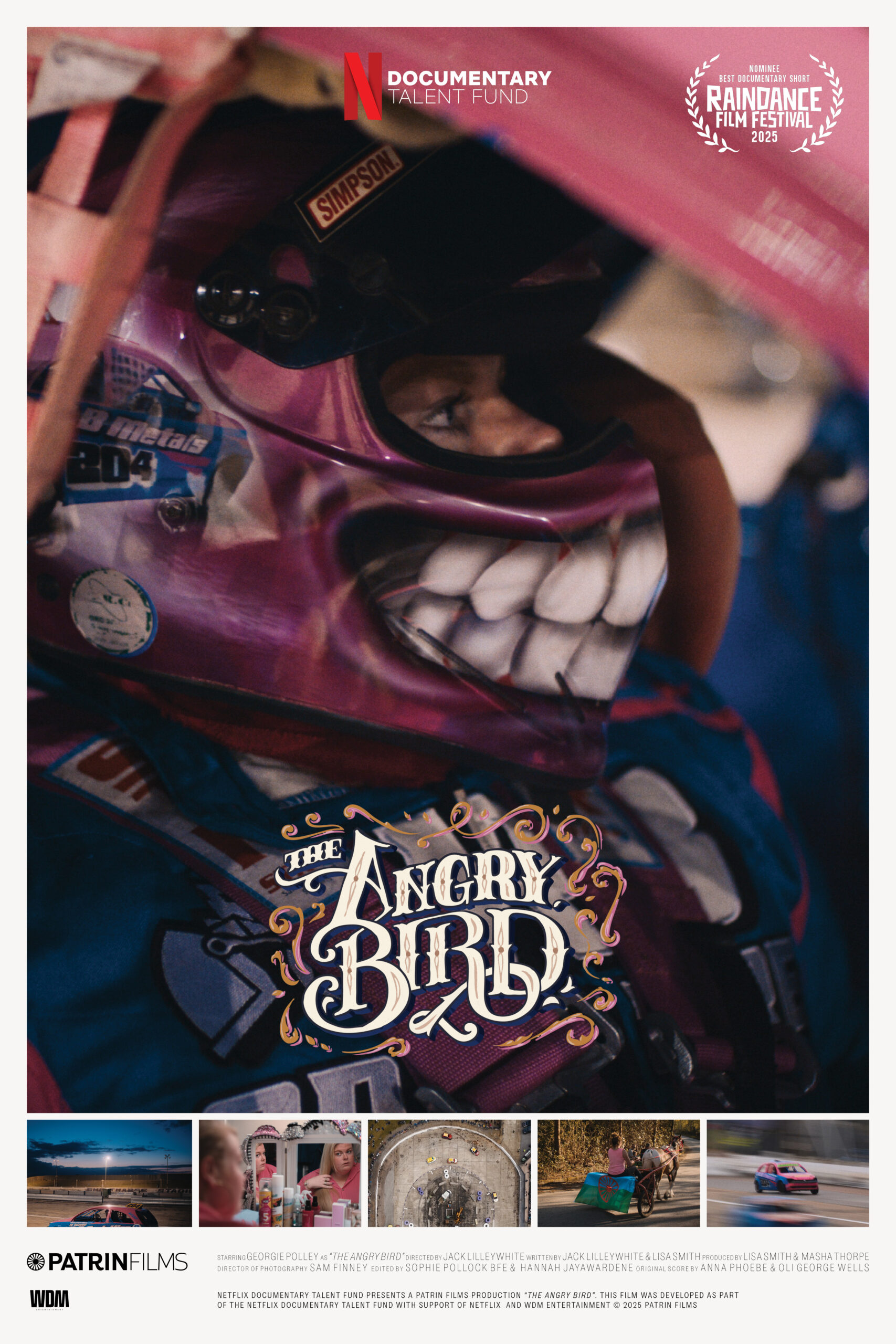
And yet, there seems to be hope. Despite the hardships faced by filmmakers who don’t want to play into the commercial narratives and aesthetics, Romani filmmakers such as Alina Șerban and Mihaela Drăgan (Romania), Lisa Smith and Toby Gorniak (UK), Carmen Baltzar (Finland), Alecio Araci and Lotta Adolfsson (Sweden), Vera Lacková (Slovakia), Sejad Ademaj (Germany) have been producing films which showcase the diversity and creative power of Romani individuals. Their films tackle a variety of topics, from Roma slavery (Letter of Forgiveness, Șerban) to Roma futurism (The Future is a Safe Place Hidden in My Braids, Drăgan), homosexuality (Chavo, Araci), transgenerational trauma (Grandma Mother Me, Adolfsson), deportation (15 Minuten, Ademaj) and, as scholar Margareta Matache puts it, the ungrievablility of Romani lives (All the Love in My Body, Baltzar). Non-Romani filmmakers including the late Jonas Selberg Augustsén (The Garbage Helicopter), Ádám Császi (3000 Numbered Pieces), Dasa Raimanova (The Exhibition), Adrian Oeser (Wesley Schwimmt), Willi Kubica (Das Casting), Julia Lemke and Anna Koch (Zirkuskind), Lara Izagirre (El Regalo), Liviu Bărbulescu (The Life and Miracles of St. Nicodemus of Tismana) have also sought to place Romani stories at the center of their films with empathy and respect.
These creators have challenged the system by producing self-reflexive, critical and emancipatory films shown at festivals such as Ake Dikhea (Germany), Tuke TV (Czech Republic), Rolling (Kosovo) and beyond, where dialogue can take place and the future of Romani cinema can be discussed.
Through participation in film festivals as well as through film screenings with panel discussions, workshops aimed at diverse audiences, by way of its film critique blog and social media channels, The Critical Film & Image Hub too aims to break the frame of antigypsyism, exposing reductive and harmful representations and holding space for emancipatory discourses.
Industry representation and audience expectations are deeply interconnected: media shapes our taste, and our taste shapes future productions. By targeting both ends of this cycle, we push for a fresh perspective while empowering audiences to recognize harmful tropes in the hope that they will ultimately refuse to pay for films which perpetuate them.
Literature:
Drăghiciu, Andra: Not Another “Gypsy-Themed” Movie? Traces of Antigypsyism in the Period Drama Peaky Blinders. In: Rostas, I., Mirga-Kruszelnicka, A., Rus, C. (eds.) Racism and Romani Studies. Critical Perspectives on Romani Studies, 2026.
Matache, Margareta: The Permanence of Anti-Roma Racism(Un)uttered Sentences, 2026.
Mladenova, Radmila (ed.): Counterstrategies to the Antigypsy Gaze, 2024.
Blogposts:
Burdușel, Bogdan: When Laughter Isn’t Harmless: “Haurențiu” and the Long History of Roma Stereotypes in Romanian Culture
Drăghiciu, Andra: In The Defense of Housekeeping for Beginners
Salazar, Mariana: Never Retreat, Never Surrender. Romani Women Tell Their Own Stories
Video: An Introduction to Antigypsyism in Film by Dr. Radmila Mladenova