

ANDRRA
Kosovo Albanian musician ANDRRA reimagines traditional women’s songs through electronic music, exploring gender, migration, cultural memory, and diaspora identity
read articleby Miroslav Pavlović PhD, Assoc. Prof., University of Novi Sad
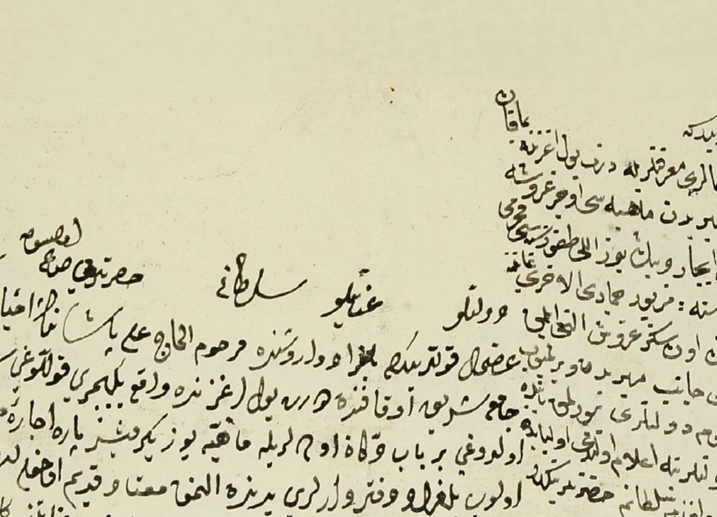 Ottoman writing
This paper explores the linguistic, palaeographic, and methodological challenges of reading and interpreting Ottoman historical sources. Particular attention is given to the complex structure of Ottoman Turkish, the diversity of scripts used in Ottoman administration, and the difficulties of working with archival documents. It also highlights the importance of critically comparing different categories of sources, particularly in the context of institutional transformations during the 17th and 18th centuries. The paper emphasizes that studying Ottoman history requires linguistic expertise, palaeographic skills, and a critical understanding of historical and institutional contexts.
Halil İnalcık—a man who, even during his exceptionally long and productive lifetime, was hailed as the “master of historians” (şeyhü’l-müverrih)—famously remarked that to study Ottoman history is to study world history. The Ottoman Empire was a polity that, at the height of its power, extended across three continents and endured for centuries. Some contemporary historians, such as İlber Ortaylı, have even interpreted it as a “Third Rome,” most notably in his book Osmanlı Barışı (The Ottoman Peace). The Ottoman Empire entered the European historical stage at a time when some of the earliest ideas of Europe and modernity were beginning to take shape, and shortly before the emergence of the powerful centralized states that would come to dominate the European political landscape.
The richness of the Ottoman legacy remains strongly visible today across a vast geographical area stretching from Africa and the Middle East to the Balkans and Central Europe, particularly in cultural forms and the built environment. Stojan Novaković, a 19th century scholar and statesman, and perhaps one of the most representative figures of Serbian cultural nationalism, captured this phenomenon when he observed that borders in the Balkans often seemed visually to divide an Oriental world from a modern European one. Here, “Oriental” should not be understood in the sense later defined by Edward Said, but rather as referring to the visible traces left by the presence of a particular civilization.
The Ottoman legacy also includes powerful bureaucratic models of state administration, accompanied by their characteristic problems of corruption and nepotism. Leaving aside the negative dimensions of these processes, however, a highly bureaucratized state apparatus also produced an enormous body of written material that is today available to historians. Among the Ottomans, mastery of writing was itself a mark of learning and was closely connected with the extraordinarily rich Persian literary and administrative tradition, to which they regarded themselves as heirs.
Ottoman history includes sultans who composed poetry, but also rulers such as Selim III, who might be described as a “sultan who loved writing,” in the sense that he demanded reports from virtually every branch of the state administration. Such reports could be written in relatively vernacular language, but in the hands of highly educated bureaucrats they often developed into an elaborate administrative style marked by an exceptionally rich Arabic and Persian vocabulary.
Ottoman Turkish itself represents a complex and historically changing mixture of linguistic styles. It combined Turkish, Arabic, and Persian elements while employing an Arabic-based script that was poorly suited to the vowel-rich phonological structure of Turkish. Unlike Arabic, Turkish—and consequently Ottoman Turkish—possesses eight vowels. The presence of elements derived from three different linguistic traditions therefore requires at least a basic knowledge of the grammar and, very often, an substanial vocabulary of all three languages.
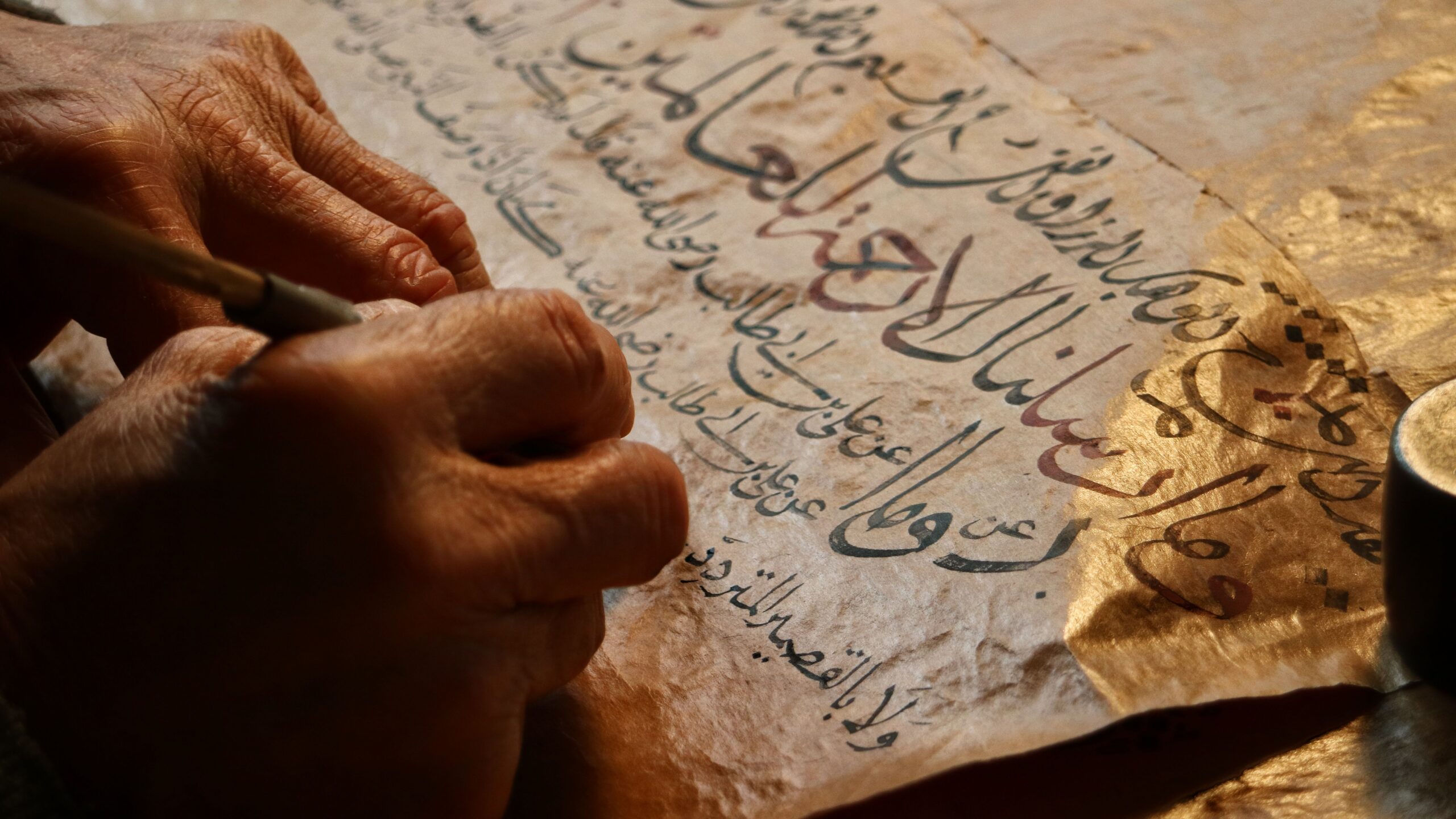
It is hardly an exaggeration to say that Ottoman Turkish frequently possessed at least two terms for concepts that may be expressed by a single word in modern languages. Here, however, we are not referring to synonims in the strict sense, but rather to lexemes of different linguistic origin, ranging from the languages of the Balkans to the Arabic and Persian. Particularly striking are bureaucratic formulations in which two words of almost identical meaning are routinely placed alongside one another. In constructing sentences, Ottoman narative could combine Turkish syntax with Arabic morphological forms and Persian constructions, particularly the izafet[1]. For this reason, even beginning to contemplate the reading of Ottoman manuscripts requires a working knowledge, together with at least a basic understanding of Arabic and Persian grammar and vocabulary.
Yet the difficulties do not end there. Islamic calligraphy developed a wide range of scripts, including the canonical “six scripts” (al-aqlām al-sitta), as well as a number of later and regionally specific hands. Several of which are encountered in Ottoman manuscripts. In Ottoman bureaucratic practice, one of the characteristic scripts of the Ottoman central bureaucracy was divanî, a distinctively Ottoman hand employed by the central bureaucracy for official documents and also for recording drafts and copies of documents issued in the offices of the Imperial Council (Divan-ı Hümayun). Registers of important affairs (mühimme defterleri), complaint registers (şikâyet defterleri), and similar series were written in related administrative scripts. Alongside divanî, Ottoman scribes employed a number of other cursive and administrative hands, including rik‘a that eventually acquired the status of an independent script. Among the most demanding and difficult for modern readers is siyakat, used primarily in financial and accounting records.
Mastering the Arabic-based scripts employed by the Ottoman bureaucracy does not, however, mean that Ottoman documents can automatically be read. Every scribe had an individual handwriting, while many documents were written in highly irregular or non-standard language, with considerable variation in grammar, spelling, and style. For someone encountering Arabic script for the first time, it is extremely difficult to recognize and correctly read an Ottoman word unless one has encountered it before.
This creates a fundamental paradox. In order to acquire experience in reading Ottoman texts, one must read them; yet in order to read them successfully, one already needs experience. The apparent circularity can seem impossible to overcome and constitutes an enduring challenge for researchers. Ottomanists, and historians in particular, therefore work with a constant degree of uncertainty, since every encounter with a new document can, in many respects, amount to a new beginning.
Documents from the 17th and 18th centuries, a period of profound institutional transformation in Ottoman history, pose an additional set of problems. Archives preserve records produced by numerous Ottoman institutions, but the picture presented by different categories of documents can be strikingly contradictory. If, for example, we analyse records of timar distribution or lists of Janissaries in isolation[2], we might conclude that these institutions continued to function largely unchanged from the so-called classical age. Yet when we turn to other archival series, such as complaint registers, a very different—and often considerably more realistic—picture of institutional practice emerges.
The study of Ottoman history is therefore filled with challenges and is anything but straightforward. It requires exceptional concentration, patience, and organization. Yet its very complexity is also what makes it intellectually demanding. The process of overcoming linguistic, palaeographic, archival, and interpretative difficulties often produces a particular sense of satisfaction when the final results begin to emerge—rewarding the considerable effort invested along the way.
[1] Izafet is a grammatical construction of Persian origin used to link nouns with their modifiers or to express possessive and attributive relationships.
[2] A timar was an assignment of revenues from specified sources, usualy agricultural taxes, granted by the Ottoman state to cavalrymen (sipahis) in return for military service. It did not constitute private ownership of the land.The Janissaries (yeniçeri) were members of an elite Ottoman infantry corps. Over time, they become an influental military, political, and socio-economic institution within the empire.
Redhouse, James W. A Turkish and English Lexicon. Constantinople: A. H. Boyajian, 1890.
Faroqhi, Suraiya. Approaching Ottoman History: An Introduction to the Sources. Cambridge: Cambridge University Press, 1999.
Buğday, Korkut M. The Routledge Introduction to Literary Ottoman. Translated by Jerold C. Frakes. London and New York: Routledge, 2009.
Kütükoğlu, Mübahat. Osmanlı Belgelerinin Dili (Diplomatik). 4th ed. Ankara: Türk Tarih Kurumu, 2018.
Lewis, Geoffrey. Turkish Grammar. 2nd ed. Oxford: Oxford University Press, 2000.
Kosovo Albanian musician ANDRRA reimagines traditional women’s songs through electronic music, exploring gender, migration, cultural memory, and diaspora identity
read articleIvo Andrić is a renowned historian and celebrated novelist. His best-known work, The Bridge on the Drina, is widely regarded as a major literary achievement. But what is the story behind the famous bridge, and what can be said about the political views of its acclaimed author?
read articleWas genau ist eigentlich Lehren und Lernen? Welche Ideen stehen dahinter und welche Rolle spielen dabei Lehrende? Der Beitrag stellt Pawlow, Wygotski und Csíkszentmihályi vor und zeigt, wie ihre unterschiedlichen Perspektiven – von Reiz und Reaktion über soziale Unterstützung bis hin zum Flow-Erleben – konkrete Impulse für die Gestaltung von Lehre geben.
read articleWho actually speaks when we speak about the Roma? Who chooses the word, the moment it appears in the media, who decides whether a story is told or passed over in silence? That question is the starting point for thinking about the long history of Roma representation in Europe.
read articleFilms and series tell stories like no other art form can: by way of moving images, sound, text, editing, costume, lighting, they create immersive spaces into which the audience is invited to escape from daily life. With our critical mind turned off for the sake of entertainment, it is in this relaxed state that our brains are most susceptible to internalizing the subtle messages embedded in the depictions we perceive on screen.
read articleEnvironmental issues in Southeastern Europe are finally gaining the attention they deserve, also because the authorities tend to remain inactive – or even wilfully blind - in the face of environmental challenges. Often, there is a pronounced discrepancy between official declarations and realities on the ground.
read articleOn April 12th, 2026, Péter Magyar and TISZA (‘Respect and Transformation’) won a landslide victory against the erstwhile preponderant FIDESZ (‘Civic Democratic Union’). This development marked the culmination of TISZA’s evolution from a ‘dark horse’ to a full-fledged party that put an end to Viktor Orbán’s consecutive 16 years in power. Several political commentators in Hungary and abroad have been debating a broad range of topics such as the ideological prerogatives of TISZA and whether/how they differ from those of FIDESZ, Péter Magyar as a ‘game-changer’, and the external ramifications that this watershed could exert on domestic politics across the ‘Visegrad Four’.
read articleThe Croatian language in Regensburg is present not only as a subject of study but also as an important part of the linguistic and cultural identity of the local community. At the University of Regensburg, the Croaticum – Center for Croatian Language and Culture – offers Croatian language courses to students of various degree programs, as well as to students from Croatian families who wish to reestablish or deepen their connection with their heritage language
read articleWas bedeutet Sprache für unser Editorial-Team? Elina spricht Russisch, Englisch und Deutsch; Antonia spricht Rumänisch, Ungarisch, Englisch und Deutsch; Iman spricht Albanisch, Englisch, Türkisch und Deutsch und versteht BKMS. Auf diesem Blog werdet ihr die Perspektiven unseres Teams kennenlernen: Wie sehen wir Sprache und was bedeutet sie für unsere Identität? Von Elina, die auf den Straßen Deutschlands mit russischer Musik ihre Zugehörigkeit findet, über Antonias bilinguales Aufwachsen bis hin zu Imans Fragen zur Sprache und dazu, was sie an sich bedeutet. Was sich sagen lässt: Sprache ist eine sehr persönliche Angelegenheit. Das Thema des Monats Februar ist Language and Identity.
read articleDie Frage, warum Rumänien trotz seiner demokratischen Mängel der Europäischen Union beitrat, kann durch den gezielten Einfluss der Europäischen Kommission begründet werden. Aus den Monitoringberichten und den Interwiew der ehemaligen Kommissionsmitglieder geht hervor, dass sie sich der Defizite bewusst waren und diese mit geopolitischen Überlegungen abwägten.
read articleRückblickend haben wir wirklich allen Grund, stolz auf das zu sein, was wir in diesem Jahr erreicht haben. Das Jahr 2025 hat uns wertvolle Erfahrungen, neue Erkenntnisse und ein tieferes Verständnis dafür gebracht, wofür seeFField steht und warum unsere Arbeit wichtig ist.
read articleRückblickend haben wir wirklich allen Grund, stolz auf das zu sein, was wir in diesem Jahr erreicht haben. Das Jahr 2025 hat uns wertvolle Erfahrungen, neue Erkenntnisse und ein tieferes Verständnis dafür gebracht, wofür seeFField steht und warum unsere Arbeit wichtig ist.
read articleSo far this year, in Romania, 57 women have been killed as a result of intentional, gender-motivated violence. This blog argues that such cases are not isolated incidents but symptoms of deeper structural problems: institutional negligence, misogynistic and patriarchal societal norms, and a lack of effective preventive mechanisms and institutions.
read articleBesonders interessant ist die bislang kaum untersuchte Frage der Genderrollen: Wie wirken sich Proteste in einem autoritären, patriarchalen System aus, wenn sie von einer Gruppe getragen werden, in der laut UNESCO 32 % mehr Frauen als Männer studieren?
read articleDas Thema des Monats November ist das Leben ausländischer Frauen in Deutschland. Wir sprechen über unsere Herausforderungen und über die Chancen, die wir alle nutzen können.
read articleIst Diella ein revolutionärer Fortschritt für Albanien – oder nur eine PR-Show in einem Land, das mit tief verwurzelten Problemen kämpft?
read articleIn diesem Bericht sollen individuelle Perspektiven auf diese Entwicklung gesammelt werden, um Vor- und Nachteile der KI-Nutzung in verschiedenen Bereichen aufzuzeigen. Ziel ist es, die Erfahrungen im Studium, im beruflichen Kontext und im privaten Alltag zu erfassen und kritisch zu reflektieren.
read articleDas Thema des Monats Oktober ist Künstliche Intelligenz und wie wir sie in unserer Arbeit und im Studium einsetzen. Doch bevor wir tiefer einsteigen, werfen wir zunächst einen Blick darauf, womit sich unser Team aktuell beschäftigt.
read articleIm griechischen Teil Thrakiens sticht die geopolitische Relevanz der Region besonders ins Auge. Bereits kurz vor den Toren unserer ersten Station Alexandroupolis passierte unser Reisebus eine große Kaserne des griechischen Militärs. Die Gründe für die hohe Militärpräsenz in der Stadt und Umgebung ergeben sich einerseits aus der Grenznähe zur Türkei und andererseits aus dem für die NATO strategisch wichtigen Hafen.
read articlePublic space in Southeast Europe reflects deeply entrenched gendered and geopolitical hierarchies, where patriarchal and nationalist narratives dominate memory and shape urban landscapes. Women, queer communities, and minorities are largely excluded from public commemoration. However, feminist artists, activists, and grassroots movements are resisting this erasure through creative interventions such as performance, street art and activist cartography.
read articleFrom March 19 to 22, partners from our network met at the University of Prishtina to discuss some key issues affecting Area Studies: How can academia continue to fulfil its public mission by adapting to new media? How do we preserve linguistic diversity in the age of AI?
read articleAt the end of 2024, tragedy shook Serbia - 16 people lost their lives due to the fall of a canopy at the newly renovated railway station in Novi Sad, once again drawing attention to the state's negligence for its own citizens and the consequences of galloping corruption. The grief quickly turned into one of the largest civil uprisings in Serbia's recent history.
read articleThe Southeast European Studies (SEES) Student Symposium was initiated by students from the universities of Graz, Regensburg, and Jena. The main goal of the symposium is to provide an opportunity for networking among students and graduates who are interested in Southeast European Studies.
read articleMasakra e Tivarit ishte një ngjarje tragjike gjatë muajve të fundit të Luftës së Dytë Botërore, kur Partizanët Jugosllavë detyruan mijëra burra shqiptarë nga Kosova të marshonin drejt Tivarit (Bar, Mali i Zi), me pretekstin e rekrutimit ushtarak. Pasi mbërritën, shumë prej tyre u ekzekutuan në vrasje masive.
read articleTwo taxi drivers, two worlds—yet one powerful student movement calling out corruption across Serbia. Fed up with broken promises and a collapsed train station canopy, these young activists want transparency, justice, and better universities. Ready to discover how they’re uniting a divided society?
read articleDer Artikel untersucht die Sprachbiographie von Michaela Kaniber, der Bayerischen Staatsministerin für Ernährung, Landwirtschaft, Forsten und Tourismus. Die Studie basiert auf einem Interview, das im November 2023 geführt wurde.
read articleWie sieht die Zukunft eines Landes aus, das jahrzehntelang isoliert war und nun zum aufstrebenden Geheimtipp für Reisende avanciert? Erleben Sie in diesem Beitrag, wie sich Albanien vom einst isolierten Land zu einem aufstrebenden Reiseziel wandelt.
read articleKo ima pravo da ispriča istoriju? Ako kolektivno sećanje predstavlja zajedničku, često institucionalizovanu prošlost, negovanu u okvirima određene društvene grupe, šta se, onda, događa sa prošlošću onih čiji glasovi nisu deo tog kolektivnog narativa, koji se sa njim ne poistovećuju i koji mu se – čak – protive?
read articleLaut einigen Studien gehören etwa 80 Wörter, die Erwachsene täglich verwenden, zur Kategorie der Tabuwörter, darunter auch Schimpfwörter. Schimpfwörter sind nicht nur bloße sprachliche Äußerungen mit spezifischer Wirkung,sondern ein äußerst ergiebiges Forschungsthema, und zwar interdisziplinär. In diesem Text wollen wir auf einige Aspekte dieses Forschungsgegenstandes aufmerksam machen.
read articleThis essay tries to make (anthropological) sense of a new and remarkable proposal that the Prime Minister of Albania, Edi Rama, came up with recently: to create a new sovereign religious statelet within Albania. How can we anthropologically interpret the emergence of this initiative and the changes it underwent over time, perhaps even leading to it being stalled without ever being implemented?
read articleSrebrenica mahnt – doch manche deutsche Politiker vergessen. Markus Söder schüttelt die Hand von Vučić, der den Genozid leugnet, während Bayern selbst Kritiker mundtot macht und Studierende exmatrikulieren will. Was ist „Nie wieder“ noch wert, wenn es nur eine politische Waffe ist?
read articleIn den letzten Jahren hat sich die europäische Migrationspolitik zu einem hochumstrittenen Thema entwickelt, das nicht nur die Mitgliedsstaaten der Europäischen Union (EU), sondern auch Drittstaaten in den politischen und moralischen Fokus rückt. Die italienische Regierung unter Ministerpräsidentin Giorgia Meloni verfolgt dabei einen besonders provokanten Ansatz: Asylverfahren sollen erstmals außerhalb der EU abgewickelt werden – in Lagern in Albanien.
read articleAlbania is currently undergoing a dynamic development and is high on Germany's foreign policy agenda. The international symposium aimed to discuss new perspectives on Albanian Studies at the University of Regensburg (UR) and beyond. We wanted to explore new perspectives for Albanian studies. In the field of linguistics, current issues of multilingualism, language policy and public discourse were discussed. Albanian is an important language of origin in Germany. In the area of literature and culture, we talked about Albanian literature under totalitarianism and transnational literature, based on Albanian authors in migration who write in foreign languages
read articleThe union’s efforts to build trust among Romanian workers in the German meat industry have been crucial, especially in the face of uncertainties such as possible plant closures and fluctuations in the global meat market. The NGG’s strategic hiring of Romanian translators after the 2021 strikes has improved communication and fostered stronger relations with workers. However, it remains to be seen on what basis the budding relationships of trust will continue.
read articleNicht nur auf der Baustelle arbeiteten die rumänischen Arbeiter Hand in Hand mit ihren deutschen Kollegen. Auch abseits des Arbeitsalltags suchten sie nach Möglichkeiten, sich in die Regensburger Gemeinschaft zu integrieren. Eine Leidenschaft verband sie dabei besonders: der Fußball.
read articleAt the beginning of June, Croatian and German flags flew over Imotski, a town in southern Croatia, as citizens gathered for a two-day celebration. They celebrated the unveiling of the “Mercedes” monument, a life-size replica of the Mercedes 115, popularly known as “Minika”.
read articlePolitics can be regarded as the art of words. Words not only express views and values but also reveal potential and planned activities and incite specific actions. Discourses about EUrope are particularly revealing in that regard, not only at election time.
read articleDaniel Stoyanov, aka Bulgarian Cartrader, is a rising star on the indiepop scene in Germany. Born in Bulgaria in 1986, he grew up in Germany since he was four. The text provides insights into his two key passions, music and cars. Following in his father's footsteps, he developed a liking for cars when he was young. As for his music, Bulgarian Cartrader has an exceptional talent for combining contemporary genres. His texts are autobiographical, reflecting, amongst other things, on his Bulgarian roots. Ger Duijzings has been intrigued by his alter-ego, exploring Daniel's life and music.
read articleThe Southeast European Studies (SEES) Student Symposium originated as an initiative by students from the universities of Graz, Jena and Regensburg. The overarching aim of the Symposium is to provide an opportunity for networking among undergraduate and graduate students who have a subject-related connection to Southeast Europe.
read articleAls Fellow kann man seinen Dienstort eine Zeit lang gegen einen Ort im Ausland eintauschen. Im Idealfall dient dies nicht allein der Materialsuche, sondern auch der besseren Vernetzung mit Kolleginnen und Kollegen aus der Region und allemal der Erweiterung des persönlichen Horizonts. In meinem Fall standen Prishtina und Skopje auf dem Reiseplan, zwei Hauptstädte Südosteuropas, die ich aufgrund von Archivrecherchen aufsuchte.
read articleDie Brücke „Stari Most“, ein Wahrzeichen der Stadt Mostar aus der osmanischen Zeit, die sich über dem Neretva-Fluss in Bosnien und Herzegowina befindet, verbindet die zwei Stadtteile miteinander. Die Brücke wurde im Laufe des Kroatisch-Bosniakischen Kriegs zerstört. Seit dem Wiederaufbau im Jahre 2004 wird sie gerne als Symbol für die Versöhnung der Gesellschaft präsentiert.
read articleSoziale Medien sind als Quelle für Nachrichten, Unterhaltung und Kommunikation allgegenwärtig. Mittlerweile gehören sie auch in der Wissenschaft zum Alltag dazu. Während sie in erster Linie als Plattform zur Verbreitung von Forschungsergebnissen betrachtet werden, bieten sie sich zugleich als vielseitige Datenquellen und interessanten Forschungsgegenstand an.
read articleSprache beziehungsweise Kommunikation ist ein entscheidendes Mittel der Politik. So ist sie selbstverständlich geprägt durch Wettbewerb und die Konfrontation verschiedener Meinungen. In der Öffentlichkeit ist diese Konkurrenz stets zu erkennen, wie etwa in Talkshows, aber auch in Form von Vandalismus im Stadtbild. Über 10 Tage habe ich eigenhändig nationalistische Zeichen in Form von Graffitis, Stickern, Flaggen und Werbeplakaten beobachtet und in Verbindung mit ähnlichem Forschungsstand gebracht.
read articleWenn man sich mit dem Begriff des „Hässlichen“ auseinandersetzt, bietet es sich an, zunächst das Konzept des „Schönen“ und die Ästhetik zu betrachten. Immanuel Kant, einer der Urväter...
read articleHaving claimed more than 22,000 casualties, the memory of the Homeland War still looms large in the social and political landscape almost 25 years later. One issue of particular concern has to do with the branitelji, or ‘defenders’ – those citizens who are officially recognised as having fought for the Croatian armed forces in that conflict.
read articleAs the upcoming general elections in Serbia takes center in the political stage, approximately 6.5 million voters are poised to make their voices heard on the 17th of December, marking yet another chapter in the nation's electoral history.
read articleGlobale Verständigung ist ein Kunststück – vor allem dann, wenn Wörter zwar gleich aussehen, aber in jeder Region ihre eigene Bedeutung haben. So meinen die politischen Begriffe Rechts und Links in Lateinamerika nicht dasselbe wie in Südosteuropa. Die Missverständnisse, die sich daraus ergeben, haben historische Ursachen, die bis in die Kolonialzeit zurückgehen...
read articleIn contrast to the persecution of Jews during the Second World War, that of Roma was not as well-organised and prepared, nor as systematic. Rather, while Roma faced constant discrimination, their erasure...
read articleWhile in recent years, Southeast European Studies has become more sophisticated due to conceptual restructuring, it is important to acknowledge that many significant challenges lay ahead of us. Some of these were discussed during the first Southeast European Studies Forum...
read articleIn Romania, plastic waste is highly visible and engenders various reactions, from indifference to debate and action. In April 2021, Mara (woman, cultural journalist, mid-thirties), posted on Facebook a photo ...
read articleEin Schrottauto fährt los auf einer holprigen Straße in den Bergen und gleich läuft dem Fahrer auch noch ein Esel entgegen. Dazu Musik von Blechbläsern und feurige Rhythmen...
read articleHistorians of corruption claim that, although direct lessons cannot be derived from the past, the phenomenon of corruption can be better understood if we study it historically. On the one hand, today's activities regarded as corrupt were not specific to countries seen as corrupt. On the other hand, successful anticorruption is a historical, protracted process determined by a multitude of factors in a particular historical configuration.
read articleOrganizacije poput Francuske alijanse Osijek i Cercle francais d'Osijek doprinijele su promicanju francuskog jezika i kulture, te su postale važna mjesta za okupljanje francuskih državljana i lokalnog stanovništva zainteresiranog za francuski jezik i kulturu.
read articleSince the Kosovo War ended on June 10th, 1999, the international community has allocated an extensive amount of official development assistance (ODA) to transform Kosovo from a territory with minimal critical infrastructure into...
read articleKasëm Trebeshina war ein albanischer Autor, Dissident und politischer Gegner von Enver Hoxha. Trotz seines eigenen kommunistischen Hintergrundes hatte er ein Problem mit der nationalen Zensurpolitik unter dem kommunistischen Regime und schrieb ein Memorandum an Hoxha, für das er verhaftet...
read articleRomania. The country, which has been a member of the European Union since 2007, usually receives little attention in the western media. However, since the start of the Russian war of aggression against Ukraine...
read articleMemory wars in Croatia are often triggered by the presence of the World War Two „Ready for the Homeland“ (Za dom spremni) Ustaša salute, from its use by right-wing politicians and war veterans...
read articleThe Southeast European Studies (SEES) Student Symposium originated as an initiative by students from the universities of Graz, Jena and Regensburg. It aimed at providing an opportunity for networking among SEES students...
read articleKy punim është pjesë e monografisë sime “Censura e letërsisë së përkthyer në Shqipërinë totalitare: rasti Robinson Kruzo”,...
read articleAls Ehefrau des albanischen Diktators Enver Hoxha bleibt Nexhmije Hoxha in der Forschung häufig unbeachtet. Dennoch verfügte sie über eine einflussreiche Stellung...
read articleRat u Ukrajini probudio je sjećanja na ratove u bivšoj Jugoslaviji; i u meni, jer sam bio u Jugoslaviji kad su počeli ratovi. U ožujku 2022., samo dvanaest dana nakon početka ruske invazije, primio sam telefonski poziv od Pavla, starog prijatelja iz davnih dana, kao da se duh iz prošlosti vratio da mi kaže: “Bok, rat se opet vratio!"...
read articleIn November 2002, the city of Belgrade announced a sculptural design competition for a memorial dedicated to the ‘fallen fighters and victims’ of the Yugoslav wars during the 1990s. In response to this, a group of artists...
read articleSanja Iveković ist eine Künstlerin die seit den 70ern für ihre - damals wie heute - neuartige und provokante Kunst bekannt ist: Neuartig im Einsatz verschiedenster Medien und provokant vor allem durch ihre Themen. Sie polarisierte weltweit mit Werken zu...
read articleThe fight against corruption ‘adorns’, as we know, the project of European integration. But in the current context of multiple crises, it may lose some of its urgency, especially when corruption helps to ‘save the day’...
read articleZwischen 2018 und 2020 wurde eine Gruppe von sechs rumänischen Bauarbeitern aus der Region Botoșani, sowie ihre Angehörigen, im Rahmen einer Masterarbeit über mehrere Monate bei ihrem Versuch...
read articleWestliche Musik und Kultur, soziale Medien und amerikanische Filme – die serbische Jugend scheint der kyrillischen Schrift den Rücken gekehrt zu haben. Möchte man den Schlagzeilen der serbischen Boulevardpresse...
read articleDuring the summer term 2022, students of the University of Regensburg had the opportunity to take part in a week- long excursion to Serbia. They visited the capital...
read articlePressefreiheit gilt als einer der zentralen Indikatoren für eine demokratische Gesellschaft. Aus gutem Grund, unabhängige Berichterstattung über...
read articleDie Stadt Belgrad ist bunt. Es liegt der Geruch von Farbe in der Luft und selbst dem ungeschulten Auge wird schnell deutlich, dass es kaum eine Hauswand gibt, die in ihrem Originalzustand belassen wurde...
read article