ANDRRA

from Ger Duijzings, Professor of Social Anthropology (University of Regensburg)

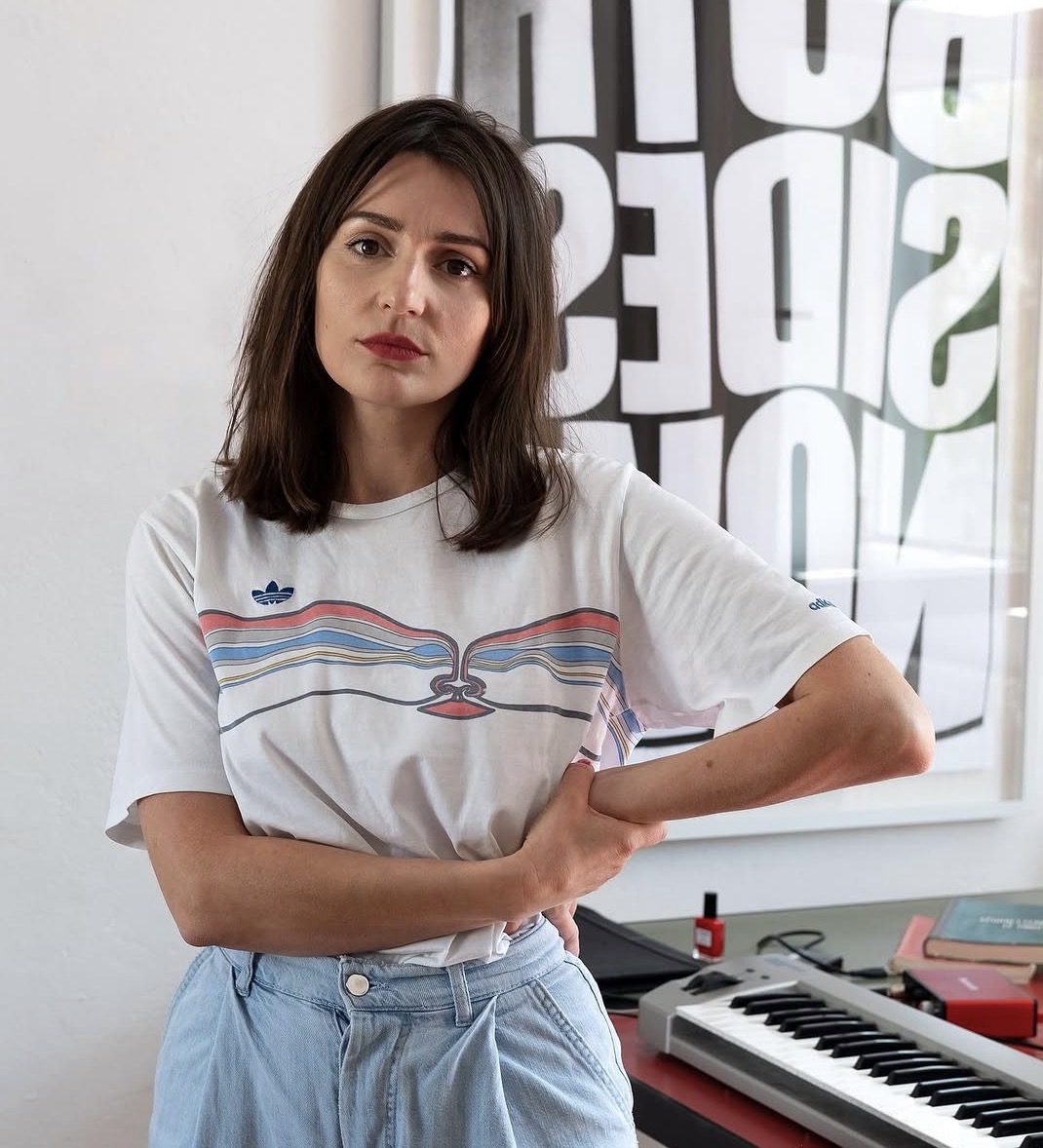
ANDRRA, photo by Angela Sisto

ANDRRA, a musician of Kosovo Albanian origin, took the independent music scene by surprise with her debut EP ‘Palinë’ (2017), featuring five songs in Albanian, traditionally performed by groups of women for girls being married off to unknown husbands, a practice that persisted in rural parts of Kosovo. Her second album ‘Maleve’ (Over the Mountains), while remastering material from her first EP, introduced new songs describing the hardships caused by migration. Defining it herself as a kind of “pop-avantgarde”, ANDRRA’s musical style is a hybrid: It combines traditional song lyrics to contemporary electronic music. At its centre is a ‘suspended’ or ‘marginalised’ identity, articulated through both music and lyrics, with which the artist attempts to reconnect. Simultaneously, her music addresses enshrined gender expectations affecting ordinary people’s lives.

ANDRRA, një këngtare me originë shqiptare nga Kosova, e befasoj skenën e muzikës të pavarur me albumin debutues të saj “Palinë” (2017), i cili përmban pesë këngë në gjuhen shqipe. Këto këngë këndoheshin tradicionalisht nga gra për vajzat që martoheshin me burra të panjohur, një praktik që ekzistonte në zonat rurale të Kosovës. Albumi i saj I dytë “Maleve”, përveç ripërpunimit të materialit nga albumi i pare, solli edhe këngë të reja që përshkruajnë vështirësinë e emigrimit. ANDRRA e përshkruan muzikën e saj si nje formë “pop-avangarde”, ku elementet e muzikës tradicionale shqiptare kombinohen me muzikën elektronike moderne. Në qendër të muzikës së saj qëndron një identitet i “marginalizuar”, të cilin artistja e rilidhë dhe e shprehë përmes muzikës dhe teksteve të këngëve të saj. Njëkohësisht, muzika e saj trajton pritshmëritë gjinore të rrënjosura thellë në shoqëri, të cilat ndijoknë në jetën e njerëzve të zakonshëm.

“Every sound we make is a bit of autobiography. It has a totally private interior yet its trajectory is public. A piece of inside projected to the outside. The censorship of such projections is a task of patriarchal culture…” (Anne Carson, The gender of sound, 1995, 21).

Berlin has become a magnet for artists and musicians from Southeastern Europe and other parts of the world. I previously wrote about Bulgarian Cartrader; another example is the Syrian singer rapper Siba, whose anti-imperialist anthem ‘Dounana’ (Without Us) went viral in 2026. A musician of Kosovo Albanian origin is ANDRRA who, almost a decade ago, took the independent music scene by surprise with her debut EP ‘Palinë’ (2017), featuring five songs in Albanian, traditionally performed by groups of women for girls being married off to unknown husbands, a practice that persisted in rural parts of Kosovo until recently and still exists in many parts of the world. They sing farewell to the bride the night before her wedding, a traditional practice called kanagjegj (or ‘henna night’). In ANDRRA’s rendering, the traditional lyrics are put to electronic music, emanating a uniquely contemporary vibe. The song ‘Kalle Llamen’ (Light the lamp) taken from that album became very successful and popular in both Kosovo and Albania.

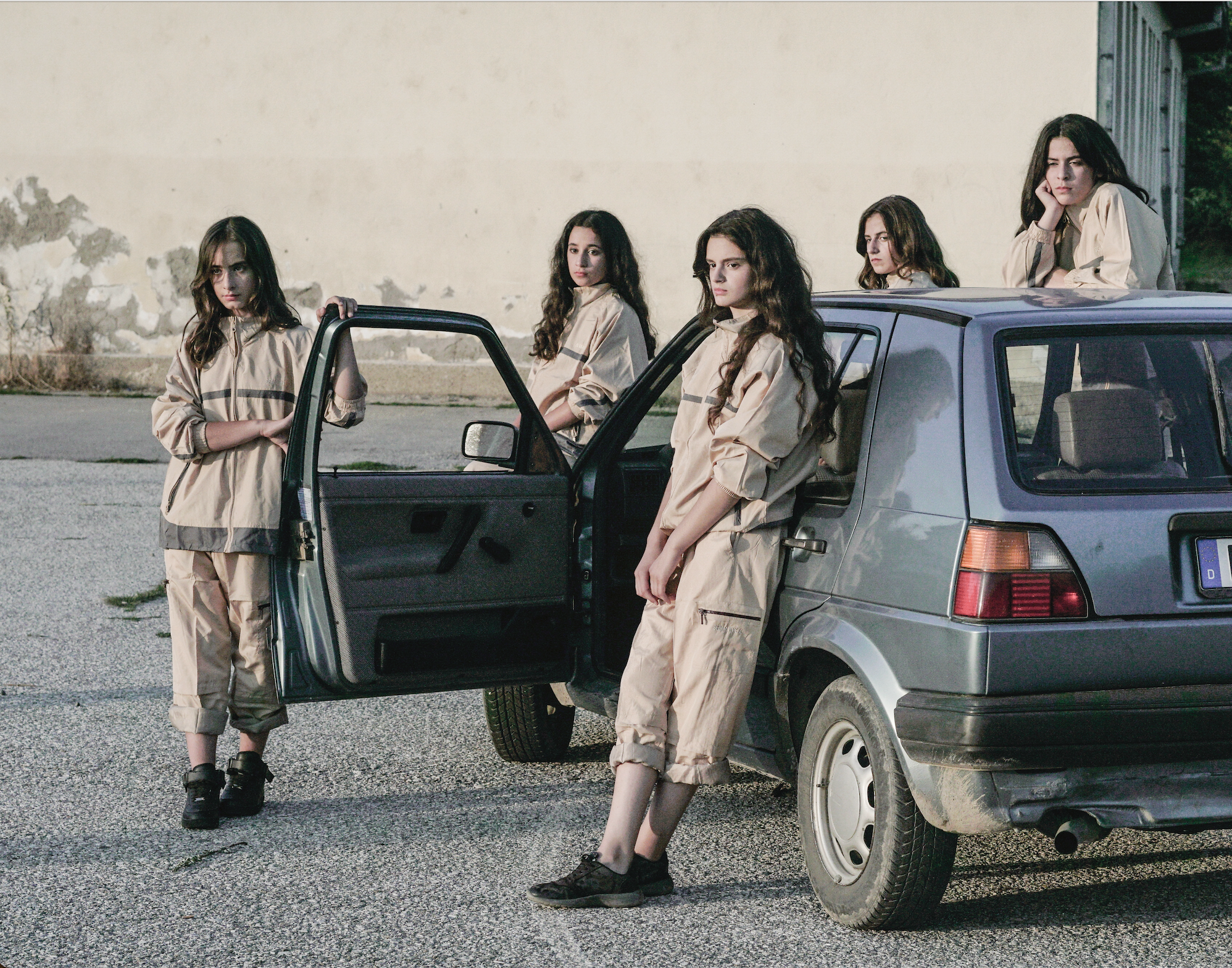
Photo by Jetmir Idrizi

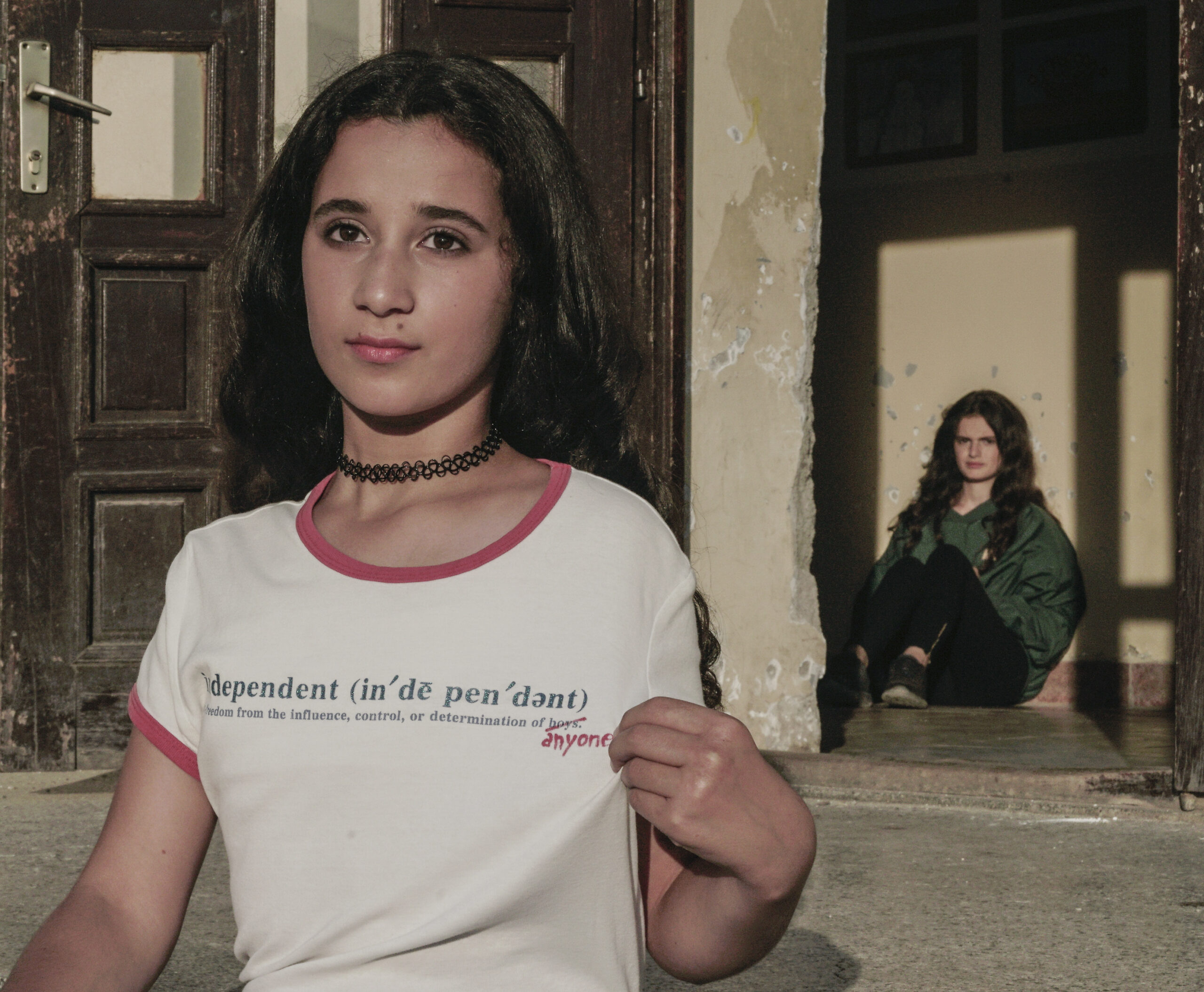
Like the title song ‘Palinë’, all songs bring across a raw emotional message, which is why they are also called ‘rhapsodies’, creating space for the bride to cry, as she will part from her family and her sheltered childhood. The songs foreshadow the harsh realities ahead of her, symbolising the heavy load of tradition and lack of choice for teenage girls, who must accept their fate in terms of becoming ‘silent’ and obedient wives. It is reminiscent of ancient religious practices called aischrologia, described by Anne Carson in her essay The Gender of Sound (1995): women draining off their emotions and apprehensiveness into “a leakproof ritual container” (Carson 1995, 25-26). Repackaging these foreboding lyrics in modern electronic music, however, has an undeniable empowering effect, giving such experiences a public voice and stage. Teenage girls from the region in which ANDRRA’s parents were born (actual cousins of the artist) acted in the music videos, as to proclaim: this new generation will not go down this path. One girl wears a t-shirt with ‘independent (in’de pēn’dənt)’ printed on the front (see also the interview with Dafina Halili).

Photo by Jetmir Idrizi

A few years later, ANDRRA released her second album, ‘Maleve’ (Over the Mountains), to similar acclaim, remastering some material from her first EP but adding new songs based on traditional lyrics describing the hardships caused by migration so common amongst Albanians: while the women stay at home, the men find themselves (often undocumented) in other parts of Europe (see particularly the song Lule). ANDRRA performed these songs at concerts before finally releasing the album in 2022. Around that same time, she also produced an exquisite live concert registration in Berlin, of songs from both her albums with a group of stellar musicians (like Larry Mullins, who worked with Iggy Pop and Nick Cave; Visar Kuçi, violinist and concert master of the Kosovo Philharmonic; and classical guitarist Petrit Çeku).

ANDRRA has been consistently addressing enshrined gender expectations affecting ordinary people’s lives. As part of this artistic mission, she also wrote the theme song ‘Zana’s lullaby’ for Antoneta Kastrati’s film ‘Zana’, which was submitted for the Oscars in 2020 and is part of the ‘Kosovo New Wave’ of award-winning films primarily made by female directors. The film recounts the traumatic story and tragic ending of a young mother, whose four-year old daughter (Zana) was shot by Serb forces overrunning their village during the 1998-99 war.

ANDRRA was born as Fatime Kosumi in Bavaria to Kosovo Albanian parents. She grew up in Rosenheim, a town to the southeast of Munich with large Bosnian and Kosovo Albanian diaspora communities. Like so many ‘second generation’ migrant children (Krasniqi 2024), she was initially uninterested in her Kosovo Albanian roots, but in her early twenties, right after the war, she decided to move to Kosovo, where she spent almost a decade. She had little knowledge of Albanian music, beyond the music available on audio (and video) cassettes circulating amongst the diaspora abroad. In Prishtina, she became a mainstream pop singer, scoring a hit and releasing an album (see the interviews with Lura Limani and Dafina Halili).

She then returned to Germany and established herself in Berlin where she finally reinvented herself as ANDRRA, crafting her very own hybrid musical style: putting traditional song lyrics to contemporary electronic music, finding her footing as an independent singer and songwriter with a clear message. She created an instantly recognisable sound, which she herself describes as a kind of “pop-avantgarde” (see the interview with Dafina Halili). Her musical career mirrors her migratory moves, but somewhat in reverse, in terms of genre, style and content. Starting her career as a pop singer following global trends, she became an independent artist in Berlin, taking a keener interest in her cultural roots, bringing to the fore, like some other diaspora musicians, a ‘suspended’ or ‘marginalised’ identity in her music and/or lyrics, with which she tried to reconnect.

Photo by Halime Gashi

In most of her interviews, ANDRRA tells how important her family, especially her mother, has been in discovering this musical heritage. Her parents had cassettes with folk songs featuring traditional instruments such as the defa (tambourines) and (two-string) çifteli. Her mother had recordings of the women-only farewell gatherings for brides on the eve before their wedding mentioned previously (Limani). ANDRRA’s mother went through these experiences herself, having been engaged at the age of 14 and married at 17. While growing up in Germany, Fatime Kosumi taped over the cassettes belonging to her mother, erasing the traditional women’s songs, which she has come to regret (see the interviews with Halili and Limani). With ANDRRA and ‘Palinë’, she made up for it and rescued the available heritage of these songs.

The songs helped ANDRRA to understand and process her mother’s life trajectory. “I think us, as individuals, as children, we carry [the] traumas and experiences of our parents if they [did not] give meaning to their experiences. I think some traumas are carried through our DNA, and if we as a society don’t deal with the past in order to give a meaning to it, it will get repeated. In one way, I am trying with all of this to give a meaning to the past of my parents for my future to have a meaning”, she said in an interview (Halili). She tells how important the songs were for her mother. She felt as if her suffering was finally recognized: “My mother cried after each song, firstly because she recognized them, but also because when she saw that someone was making songs with her stories, she felt valuable” (Limani). Illustrative is the video of ‘Moj Nano’ (Oh Mother), from the album Palinë, which ANDRRA shot with her mother doing household chores and working in the field (Krasniqi 2024).

ANDRRA did in-depth research, working almost like an anthropologist, documenting, salvaging and ‘repackaging’ traditional songs for a modern audience. She listened to folk festival recordings, where she recognised some of her mother’s songs (Limani). Rural songs were hard to find, though, as urban songs were performed and recorded far more often. She then discovered the folk collections which the renowned Kosovo Albanian folklorist Anton Çetta compiled and published during the 1980s. The texts she took from there, but not the music as Çetta had only written down the lyrics. Without melodies or rhythms, she continued her ethnographic search, teaming up with French filmmaker Vincent Moon, with whom she produced a documentary film. With him she travelled across Kosovo in May 2014 to record women’s songs, which resulted in ‘Kangë e defa – Female Rhapsody in Kosova’, released alongside the album ‘Palinë’ in 2017 (accessible on Vimeo).

Unable to locate many kanagjegj songs, she took the freedom to compose her own music, starting from the lyrics, combining them with the sounds that emerged in her head. As ANDRRA explained to me in a conversation, she also took liberties with the lyrics, merging songs or writing lines herself. The traditional material was ‘translated’ for modern musical audiences, bringing them onto the stages of clubs and festivals. Although the music is contemporary, it breathes the social and cultural context from which it emerged. Like Bulgarian Cartrader’s refusal to reproduce Balkan musical stereotypes, the ‘folk’ content is only visible in the lyrics, not in the music, except for the occasional use of traditional instruments (Halili). The music is austere, weaving complex polyphonic sound tapestries, overlayered by ANDRRA’S beautiful and melodic voice. The music has a repetitive and hypnotic quality, fitting for the predicament of the girls that are being forced into a social and cultural corset.

ANDRRA has been taking a sabbatical since the release of her last album. She does not know what will follow, whether the next step in her career will be another musical project or something else. “I’m not closing any doors”, she says, but currently “there’s nothing inside me that wants to be expressed. I’m enjoying that, it’s a lovely feeling. There may well be things I’ll be very eager to say in the future”. She keeps listening to music but resists the pressure to produce another album as long as there is no irresistible new idea. For the time being, she makes a living as an accounting controller, playing around with numbers and figures. “Which is not so different from composing music”, she says with a smile, as if trying to say that every new stage in life, even when it is a challenge, can be alleviated through art, helping us to cope with the daily grind or worse.

References

Becht, Alexandra Helena. n.d. “ANDRRA: Folklore im Aufbruch”. Das Salz des Tages (Website).

Carson, Anne. 1995. The gender of sound. London: Spiral House.

Halili, Dafina. 2017. “ANDRRA: Exploring Albanian rhapsodies gives meaning to my parents’ pasts and my own future”. In: Kosovo 2.0, 30 January 2017.

Krasniqi, Eli. 2024. “Belongings, Resistance and Emancipation in the Cultural Production of Second-Generation Transnationalism”. Paper presented at the 11th InASEA Conference, In, out and in between: Transnational and internal migration in Southeast Europe, Prishtina, 19-22 September 2024.

Limani, Lura. 2017. “Women’s folk songs, electrified: An interview with ANDRRA”. In: Prishtina Insight, 23 May 2017.

Maleve – Over the Mountains. 2019. Programme booklet of the ANDRRA concert on 23 August 2019 in Berlin, a Pop-Kultur Festival production.

ANDRRA. 2018. Palinë. Album booklet with Albanian lyrics and translations, and accompanying texts by Andrra (introduction) and Eli Krasniqi (epilogue). Revised edition August 2018.


Discover ANDRRA on Social Media:
https://www.instagram.com/andrramusic/

https://www.facebook.com/andrra/

https://www.youtube.com/@andrramusic

https://open.spotify.com/artist/1svdPTpKtHilhR4eaAWplV

https://andrra-music.bandcamp.com/

Published: 11.11.2026
Categories: