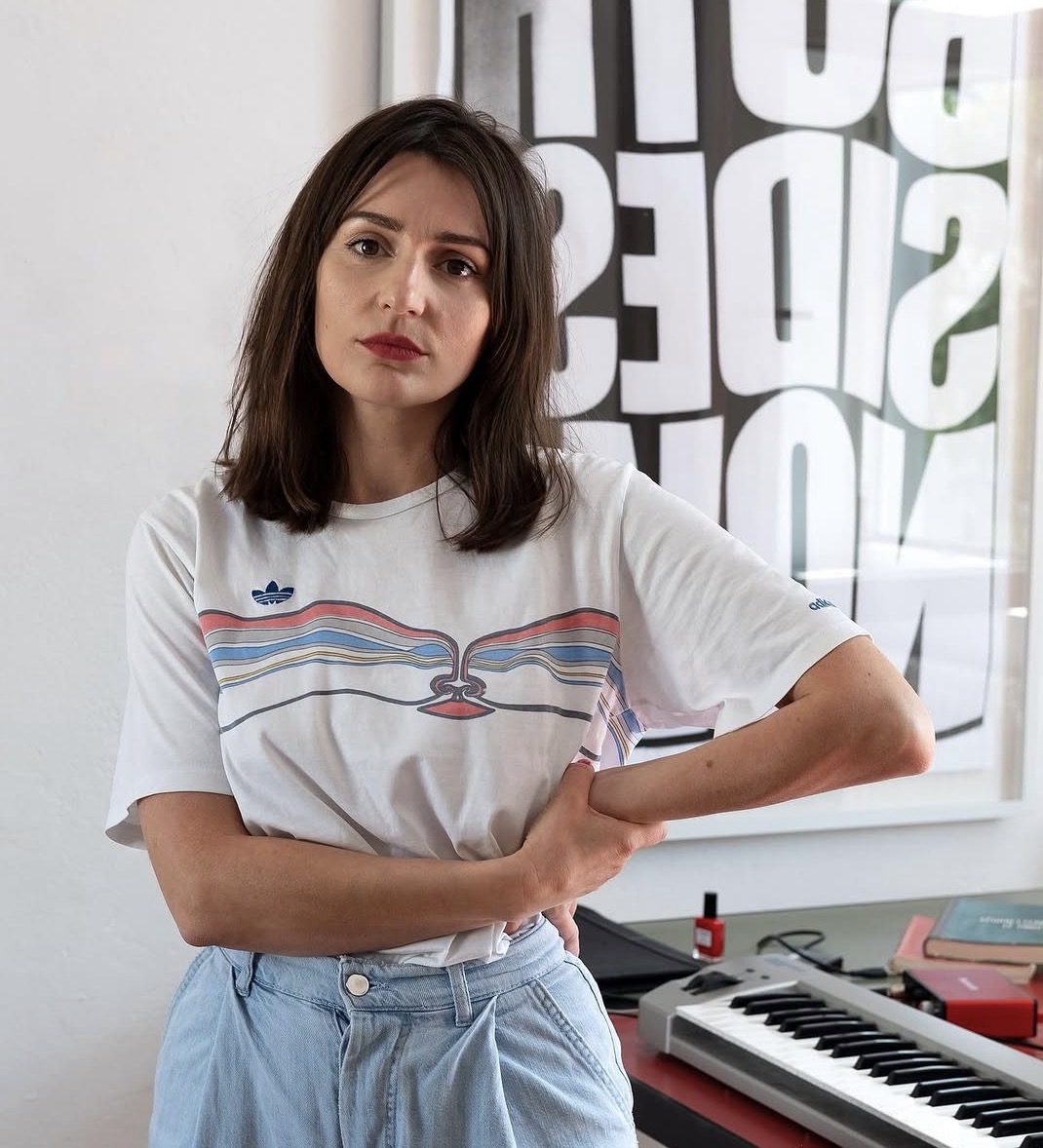
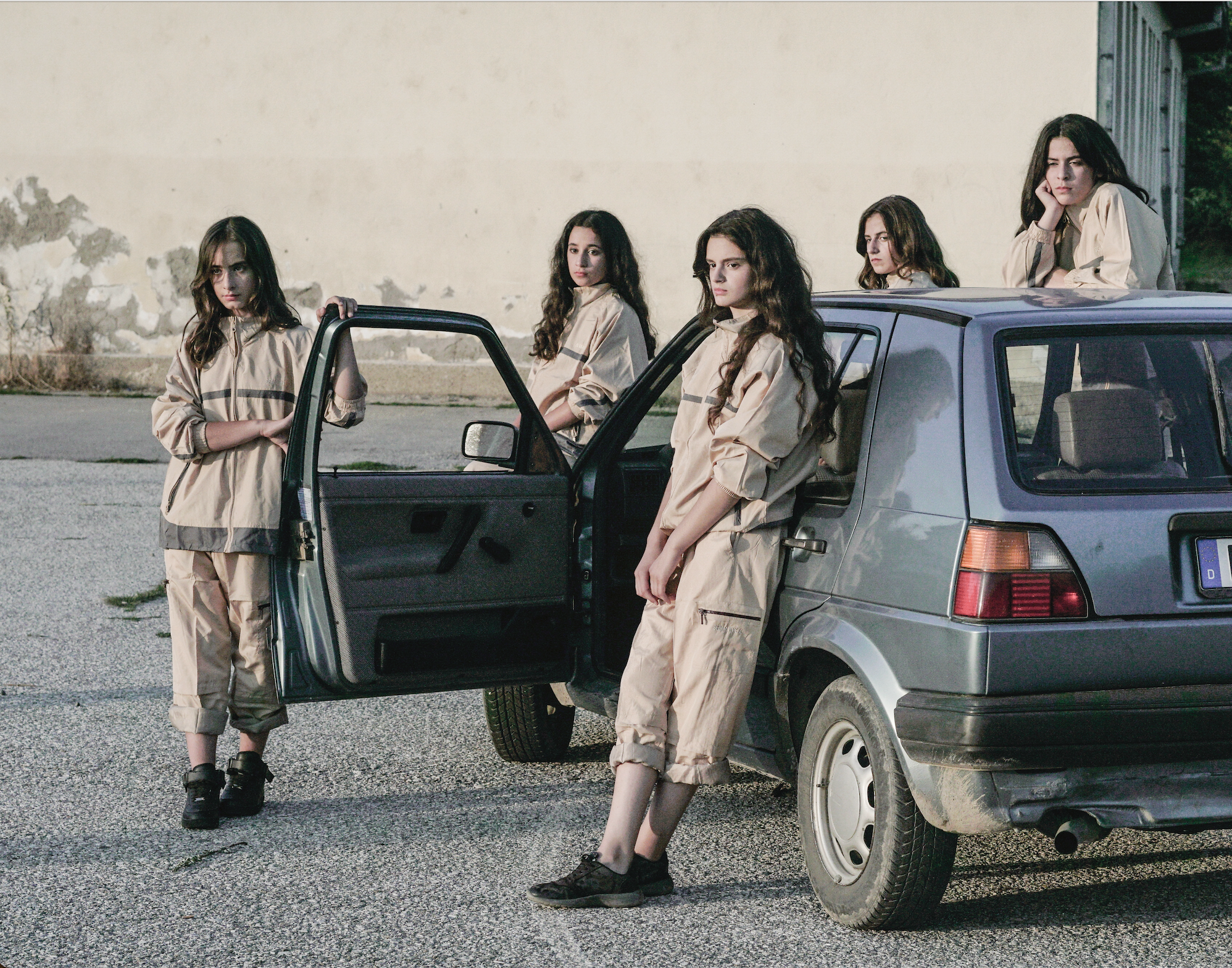
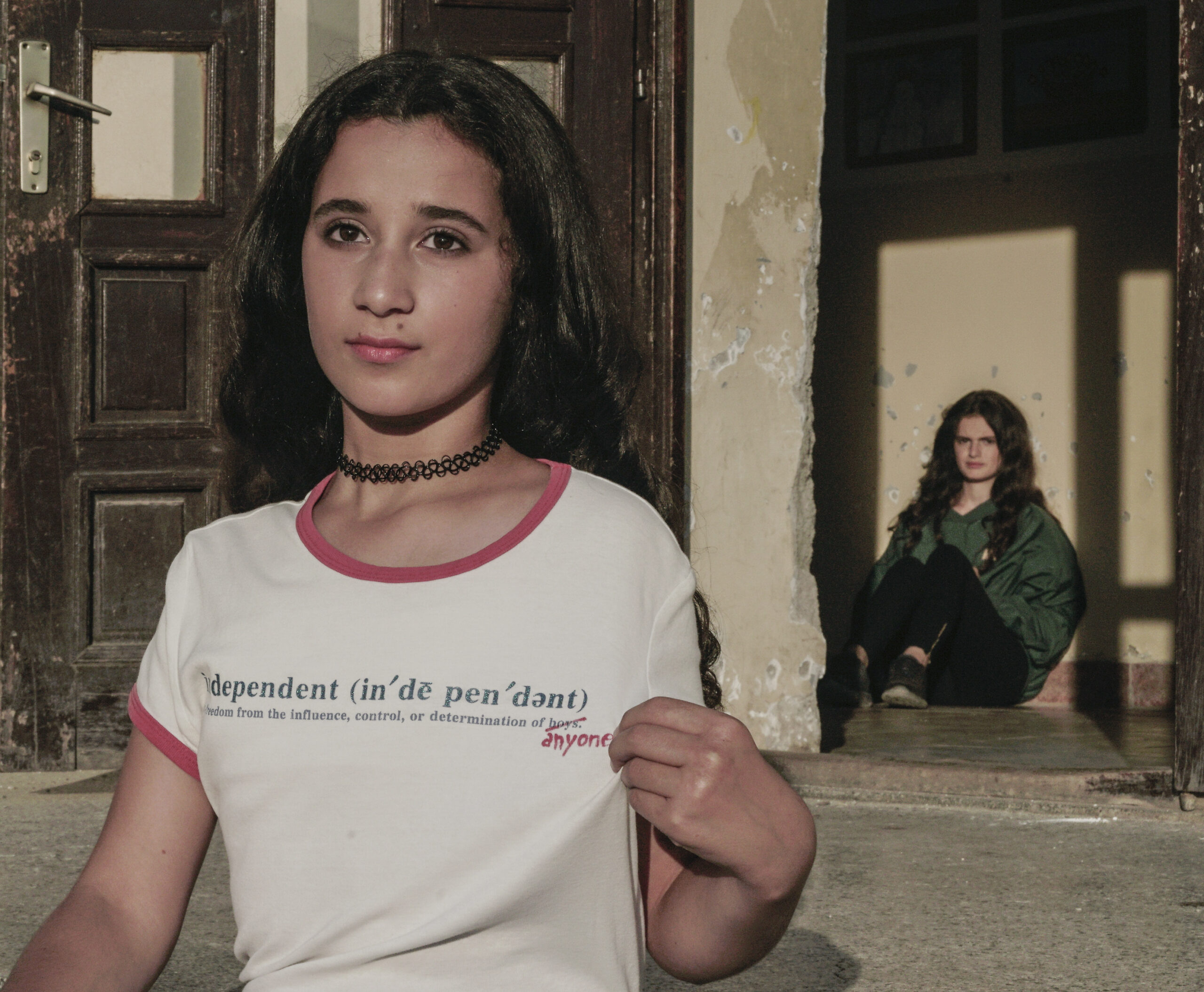
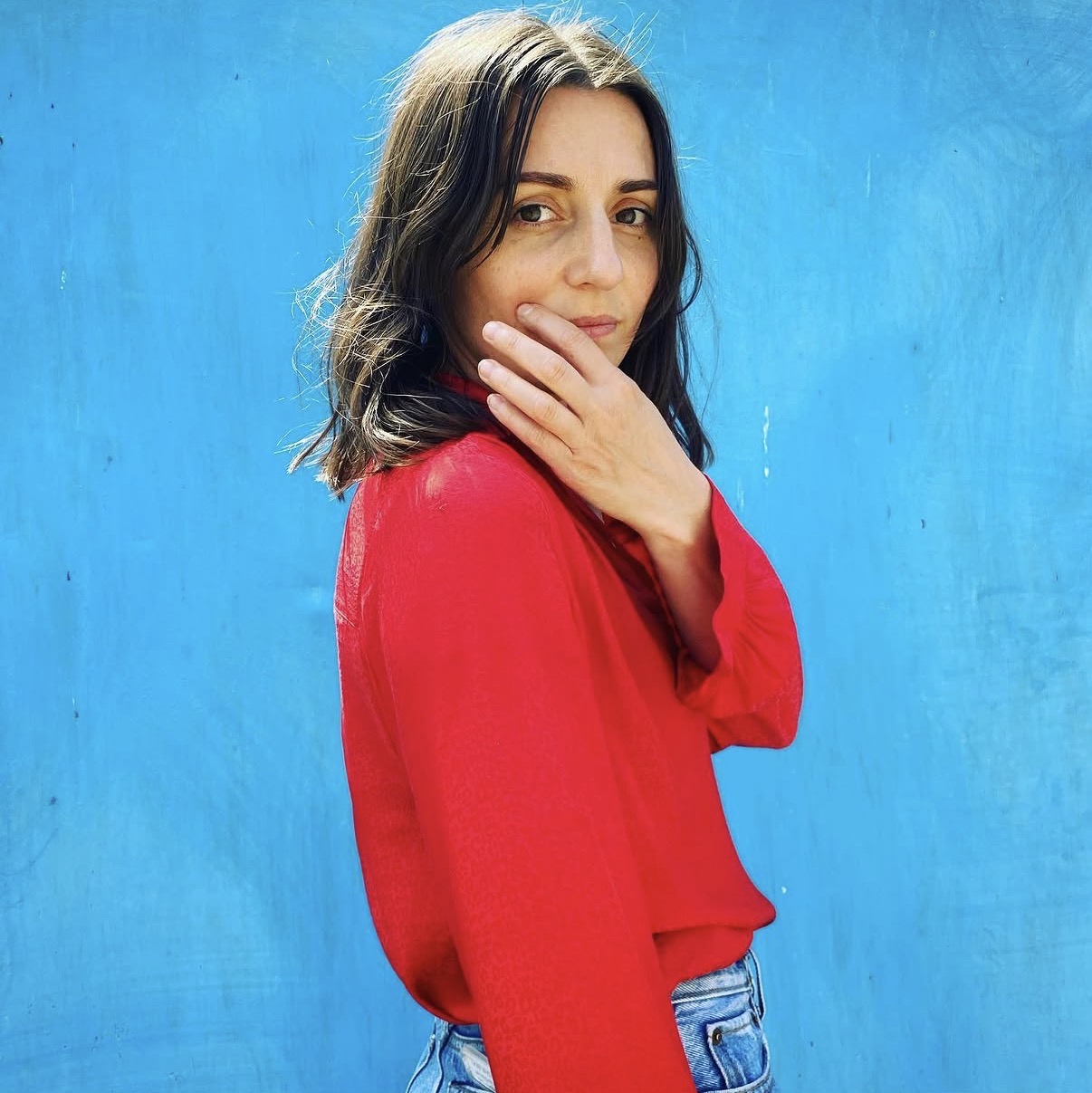
In most of her interviews, ANDRRA tells how important her family, especially her mother, has been in discovering this musical heritage. Her parents had cassettes with folk songs featuring traditional instruments such as the defa (tambourines) and (two-string) çifteli. Her mother had recordings of the women-only farewell gatherings for brides on the eve before their wedding mentioned previously (Limani). ANDRRA’s mother went through these experiences herself, having been engaged at the age of 14 and married at 17. While growing up in Germany, Fatime Kosumi taped over the cassettes belonging to her mother, erasing the traditional women’s songs, which she has come to regret (see the interviews with Halili and Limani). With ANDRRA and ‘Palinë’, she made up for it and rescued the available heritage of these songs.
The songs helped ANDRRA to understand and process her mother’s life trajectory. “I think us, as individuals, as children, we carry [the] traumas and experiences of our parents if they [did not] give meaning to their experiences. I think some traumas are carried through our DNA, and if we as a society don’t deal with the past in order to give a meaning to it, it will get repeated. In one way, I am trying with all of this to give a meaning to the past of my parents for my future to have a meaning”, she said in an interview (Halili). She tells how important the songs were for her mother. She felt as if her suffering was finally recognized: “My mother cried after each song, firstly because she recognized them, but also because when she saw that someone was making songs with her stories, she felt valuable” (Limani). Illustrative is the video of ‘Moj Nano’ (Oh Mother), from the album Palinë, which ANDRRA shot with her mother doing household chores and working in the field (Krasniqi 2024).
ANDRRA did in-depth research, working almost like an anthropologist, documenting, salvaging and ‘repackaging’ traditional songs for a modern audience. She listened to folk festival recordings, where she recognised some of her mother’s songs (Limani). Rural songs were hard to find, though, as urban songs were performed and recorded far more often. She then discovered the folk collections which the renowned Kosovo Albanian folklorist Anton Çetta compiled and published during the 1980s. The texts she took from there, but not the music as Çetta had only written down the lyrics. Without melodies or rhythms, she continued her ethnographic search, teaming up with French filmmaker Vincent Moon, with whom she produced a documentary film. With him she travelled across Kosovo in May 2014 to record women’s songs, which resulted in ‘Kangë e defa – Female Rhapsody in Kosova’, released alongside the album ‘Palinë’ in 2017 (accessible on Vimeo).
Unable to locate many kanagjegj songs, she took the freedom to compose her own music, starting from the lyrics, combining them with the sounds that emerged in her head. As ANDRRA explained to me in a conversation, she also took liberties with the lyrics, merging songs or writing lines herself. The traditional material was ‘translated’ for modern musical audiences, bringing them onto the stages of clubs and festivals. Although the music is contemporary, it breathes the social and cultural context from which it emerged. Like Bulgarian Cartrader’s refusal to reproduce Balkan musical stereotypes, the ‘folk’ content is only visible in the lyrics, not in the music, except for the occasional use of traditional instruments (Halili). The music is austere, weaving complex polyphonic sound tapestries, overlayered by ANDRRA’S beautiful and melodic voice. The music has a repetitive and hypnotic quality, fitting for the predicament of the girls that are being forced into a social and cultural corset.
ANDRRA has been taking a sabbatical since the release of her last album. She does not know what will follow, whether the next step in her career will be another musical project or something else. “I’m not closing any doors”, she says, but currently “there’s nothing inside me that wants to be expressed. I’m enjoying that, it’s a lovely feeling. There may well be things I’ll be very eager to say in the future”. She keeps listening to music but resists the pressure to produce another album as long as there is no irresistible new idea. For the time being, she makes a living as an accounting controller, playing around with numbers and figures. “Which is not so different from composing music”, she says with a smile, as if trying to say that every new stage in life, even when it is a challenge, can be alleviated through art, helping us to cope with the daily grind or worse.